Survivors and Transcenders

I call them transcenders, because “surviving” (i.e., not dying from) child abuse is not the significant thing. It is when chance becomes choice that people distinguish themselves.

Also available in Spanish (http://www.vachss.com/SP_transcender.html)

Also available in Russian (http://bit.ly/2kkQF5m)

Also available in German (http://www.vachss.com/german_transcender.html)

I believe that many people who were abused as children do themselves—and the entire struggle—a disservice when they refer to themselves as “survivors.” A long time ago, I found myself in the middle of a war zone. I was not killed. Hence, I “survived.” That was happenstance … just plain luck, not due to any greatness of character or heroism on my part. But what about those raised in a POW camp called “childhood?” Some of those children not only lived through it, not only refused to imitate the oppressor (evil is a decision, not a destiny), but actually maintained sufficient empathy to care about the protection of other children once they themselves became adults and were “out of danger.”

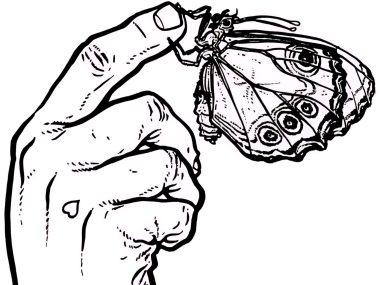
To me, such people are our greatest heroes. They represent the hope of our species, living proof that there is nothing bio–genetic about child abuse. I call them transcenders, because “surviving” (i.e., not dying from) child abuse is not the significant thing. It is when chance becomes choice that people distinguish themselves. Two little children are abused. Neither dies. One grows up and becomes a child abuser. The other becomes a child protector. One “passes it on.” One “breaks the cycle.” Should we call them both by the same name? Not in my book. (And not in my books, either.)
You May Also Like

Guardian of the Innocent

“Aftershock is really about America’s ‘rape culture,’ a culture so pervasive that there’s no place immune to it. There’s no safe place from it. If this sounds like an outrageous accusation to you, just check the recent events in Steubenville, Ohio. Young men commit atrocities, and get treated as juvenile offenders, while the victim is the target of Internet threats traced to young girls in that same town. It’s hideous enough to be the victim of a sex crime, but a thousand times worse when the community appears to side with the perpetrators.” — BoroPulse.com, May 20, 2013
Read More

blur

Andrew Vachss delivered his requisite one-two punch last year by releasing two major projects; False Allegations (Alfred A. Knopf), a continuation of his enormously popular series of Burke novels and Hard Looks (Dark Horse Comics), a comic-book adaptation of twenty of his short stories. A tireless advocate (literally, Vachss is an attorney) on behalf of abused children and youth, to call him an over-achiever is something of an understatement. Here is a guy who writes books and develops movie projects in his spare time. One word or warning, never ask Andrew Vachss about the weather because it’s really not a very good idea to make small talk with a warrior. His work is grim, yet, he really wouldn’t have it any other way.
Read More

Unsafe at Any Age

A trial is not a search for truth. It is a contest, and often, one that produces no winners. In certain cases—;the Scottsboro Boys and Roy Bryant and J. W. Milam in the murder of Emmett Till—a trial produces an outcome so repulsive that we are shocked into individual and collective self–examination. Other trials cost us much, but teach us nothing. Guess where the Michael Jackson verdict fits in?
Read More